HFSS stands for high fat, salt, and sugar, and products in this category face strict advertising limits across TV, online, and social media. With fewer paid media options, packaging has become the main way to build brand recognition and communicate with shoppers.
Brand teams must focus briefs on clear brand signals, consistent assets, and measurable outcomes, and stop asking designers to rely on indulgent imagery, short-term “pop,” or competitor imitations. The new HFSS rules are rolling out in the UK through 2026, making compliance and strategic packaging more important than ever.
These changes set the stage for the following guide on how to brief a packaging redesign in an HFSS-regulated category to drive recognition, memory, and long-term growth.
Why Packaging Briefs Must Change Under HFSS Rules
HFSS rules sharply reduce paid advertising across TV, online, and social. Brands have fewer chances to stay visible and remind people they exist.
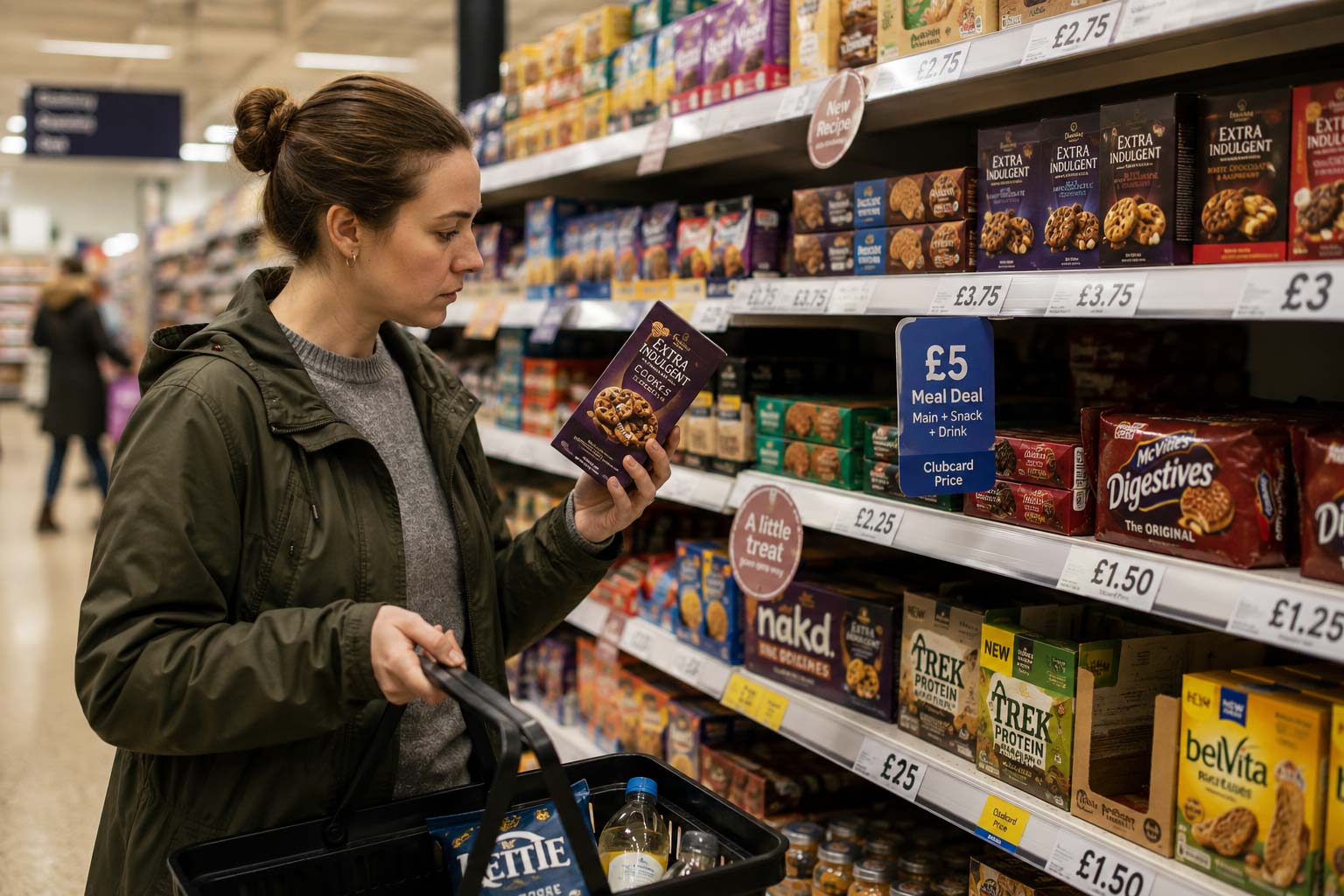
Because of that, packaging now carries much more weight. It is often the most consistent brand signal shoppers see, both in-store and at home. It is no longer just a support asset. It is a main communication channel.
However, many packaging briefs have not caught up. They are still written for a time when packaging messaging remained simple and the marketing campaign did the heavy lifting.
This leads to a common problem. Packs look good, but they do not build recognition, strengthen memory, or support long-term growth.
The issue is not design quality. It is the strategic part of the brief. When the brief focuses on short-term appeal instead of brand recall, it limits what packaging can achieve. The brief becomes a strategic bottleneck.
What Most Packaging Briefs Still Get Wrong

Many packaging briefs still ask for the same things that worked before HFSS. These requests made sense when advertising did most of the brand building. Now, they often fail.
Common outdated requests:
- “Make it pop on shelf” – Often leads to bright colours and busy layouts that grab attention briefly but don’t build recognition.
- “Make the product look more indulgent” – Appetite appeal is limited under HFSS and can’t carry the pack alone.
- “Add more claims and callouts” – More messages usually create clutter and confuse shoppers.
- “Follow current design trends” – Trendy packs look modern but often blend in and hurt long-term recognition.
- “Modernise without changing too much” – Small tweaks rarely create real impact or reverse decline.
Why these approaches fail under HFSS:
- Noise ≠ recognition – Shelf standout alone doesn’t make a brand memorable.
- Appetite appeal needs support – Without ads or media, indulgent visuals have a limited effect.
- Too many messages reduce clarity – Packs must communicate quickly and clearly.
- Trend-led design ages fast – Following fads means frequent redesigns and weak brand identity.
- Minor tweaks don’t rebuild mental availability – Safe changes reassure internally but rarely influence shoppers.
What Brand Teams Should Stop Asking Designers to Do

HFSS has not just changed what packaging can do — it has exposed what it cannot do alone. Many briefs still ask packaging designers to fix bigger brand problems with visuals. This rarely works.
Stop asking designers to solve strategy gaps:
- Design cannot fix unclear positioning, weak brand assets, or a brand with no clear role.
- Without clarity on purpose or audience, designers guess — and guesswork doesn’t drive growth.
- HFSS leaves little room for error; packaging must be precise, not decorative.
Stop using competitors as the main reference:
- Copying trends or category leaders doesn’t build brand memory.
- Long-established brands benefit from legacy assets; imitators disappear faster.
- Focus on what the brand can own, not what’s familiar.
Stop treating packaging as a single-SKU problem:
- Recognition is built across ranges, formats, and touchpoints.
- Briefs must consider how design works as a system, not just a one-off pack.
Stop prioritising short-term conversion over long-term memory:
- Claims and visual appeal alone no longer persuade under HFSS.
- Memory and recognition are now the main drivers of growth.
Stop asking for multiple ideas without a strategy:
- “Show us a few routes” without criteria leads to subjective choices.
- Exploration works only when anchored to clear goals: brand memory, key signals, and assets to strengthen.
What a Strong HFSS-Ready Packaging Brief Must Include
A Clear Role for Packaging in the Brand Ecosystem
The brief should clearly say what the pack is meant to do. Is it the main tool for building the brand? Should it make the brand instantly recognisable on the shelf? Does it need to work across digital thumbnails, online media, and out-of-home channels? It should also explain how HFSS limits traditional advertising and how packaging must make up for that lost exposure.
A Distinctiveness Audit (Not Just Competitors)
A strong brief looks beyond competitors and focuses on the brand itself. It should identify which colours, logos, shapes, or other assets people already recognise, and what makes the brand memorable without showing the product. Designers should use this to create systems that repeat these signals across all packs, helping the brand stand out even under HFSS rules.
A Clear Positioning Shift (If One Is Needed)
The brief should be honest about why sales may be declining. Is the brand culturally out of touch, too familiar, or confusing in value? It should explain what the brand needs to move away from and what it should move toward. A packaging redesign isn’t just cosmetic — it should signal a clear strategic shift.
Guidance on What Cannot Be Relied On Anymore
HFSS restrictions limit what designers can do, so the brief should make this clear. Product images, indulgence cues, and excessive claims are less usable. This allows designers to focus on the things that matter: core brand assets, tone of voice, and shapes or colours that make the brand recognisable and memorable.
Success Metrics Beyond “Looks Better”
The brief should define success in practical terms, not just visual appeal. This could include being easier to recognise from a distance, helping shoppers navigate the shelf quickly, or keeping the look consistent across all SKUs. Clear, measurable goals help designers know what to prioritise and what counts as success.
Practical Briefing Checklist for HFSS Categories

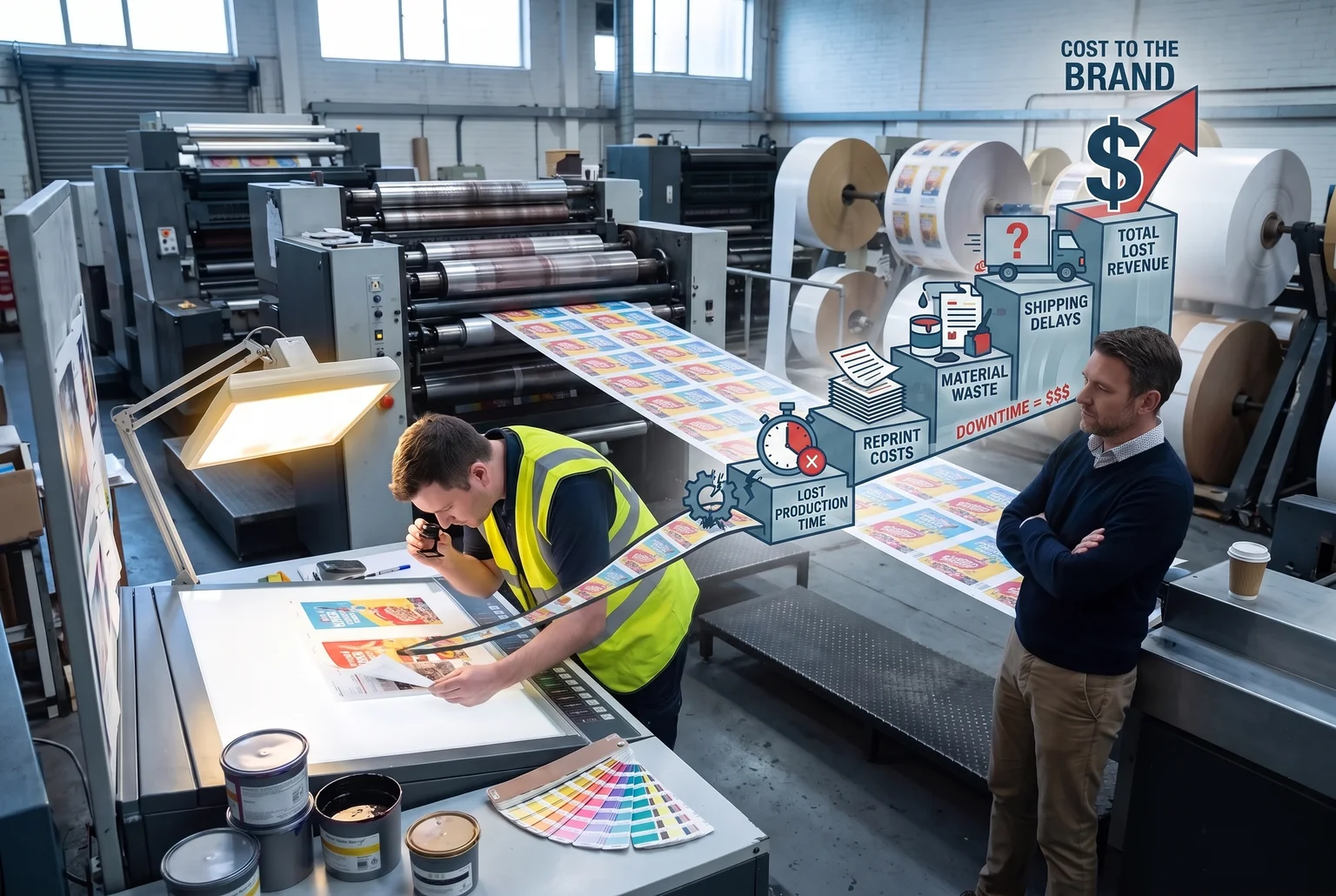
In HFSS-regulated markets, a packaging brief is no longer a creative wish list. It is a commercial tool. The questions below help ensure that briefs are anchored in business reality, not legacy habits — and that design effort is focused on outcomes that actually drive recovery and growth.
1. What Commercial Problem Are We Solving?
Start with the business challenge, not the design task.
Is the issue declining penetration, weakened recognition, poor shelf navigation, or loss of relevance with a core audience? HFSS has made surface-level fixes less effective, so clarity here is essential.
A brief that starts with “we need a refresh” without defining the commercial reason almost always leads to cosmetic change.
2. What Brand Cues Must Be Unmistakable?
Identify the assets that must do the heavy lifting.
These might include colour, typography, logo behaviour, structural shape, tone of voice, or iconography. Under HFSS, these cues need to work even when:
- Product imagery is reduced
- Messaging is stripped back
- The pack is seen at speed or at small scale
If brand recognition depends primarily on the product image, the brief should acknowledge this risk upfront.
3. What Must Remain Consistent Across the Range?
Memory is built through repetition.
Define which elements must stay consistent across SKUs, formats, and variants to strengthen recognition over time. This is especially critical for brands with broad portfolios, where inconsistency can quickly erode salience.
Consistency is not about rigidity — it’s about reinforcing the signals shoppers learn to look for.
4. What Can Change Boldly?
Every brief should explicitly define where designers have permission to be bold.
This might include:
- A new visual hierarchy
- Stronger brand-led graphics
- Simplified layouts
- More distinctive use of language or tone
HFSS has reduced the value of safe, incremental change. If boldness is needed to reverse decline, the brief must say so — clearly.
5. How Will This Work Without Paid Media Support?
Assume the pack will have to work alone.
Ask how the design will perform when:
- Advertising reach is limited
- Promotions are stripped back
- The pack is the only brand signal a shopper sees
This forces the brief to focus on recognition, clarity, and memorability — not reliance on external reinforcement.
6. How Will Success Be Measured After Launch?
Define success in behavioural and commercial terms.
This might include:
- Improved recognition or recall
- Faster navigation at shelf
- Stronger consistency across touchpoints
- Reduced need for promotional support
When success is clearly defined, design decisions become sharper — and post-launch evaluation becomes more meaningful.
If you’re looking to turn your HFSS packaging brief into a powerful growth tool, we at Goulding Media can help. Our team acts as a trusted partner and packaging designer in the UK, guiding brands to create designs that build recognition, strengthen memory, and perform across all touchpoints — even with strict HFSS restrictions. Let us help your packaging do more than look good; let it drive real business results.
Real-World Brands: How HFSS Rules Affect Packaging and Brand Impact
1. Cadbury (Mondelez)
Cadbury has begun adjusting its product range and packaging to respond to HFSS restrictions. It launched 100‑calorie portion packs and reduced‑sugar variants of popular products like Fudge, Curly Wurly and Chomp to fall below HFSS thresholds.
It has also focused marketing on non‑HFSS products and in‑store branding rather than traditional HFSS ads, shifting visibility to packaging and shopper moments instead of paid advertising.
In preparation for regulation, Mondelez also reformulated other Cadbury lines (e.g., drinking chocolate) and extended ranges such as belVita with lower‑sugar and reduced‑fat options, which affected both packaging and positioning to emphasise healthier credentials.
2. Walkers (PepsiCo)
Walkers, the UK’s leading crisp brand, has actively reformulated and redesigned ranges to meet HFSS compliance. Their Walkers Baked range and Doritos Dippers have been updated with reduced fat or salt content and now fall below HFSS limits.
Packaging has been altered to highlight these “healthier” claims clearly on‑pack — a shift from snack indulgence visuals to wellness‑oriented cues that work in a regulated environment.
In 2024 and 2025, Walkers also announced making multiple SKUs non‑HFSS, with packaging reflecting health claims and compliant product formats to retain shelf prominence despite reduced advertising options.
3. Coca‑Cola
Coca‑Cola’s flagship full‑sugar drink is classed as HFSS, meaning its core product faces significant advertising restrictions. In response, Coca‑Cola has shifted focus to zero‑sugar and diet variants, which are HFSS‑exempt and can be promoted more freely.
This shift is visible not just in media strategy but also in packaging emphasis — brands are leaning into distinct low‑sugar variants on shelves and in branding to maintain visibility and relevance without relying on restricted ads.
4. Nestlé & McVitie’s (pladis)
Nestlé’s wide portfolio — including KitKat and other confectionery — has driven reformulation efforts to lower sugar content in key products, which affects pack messaging, nutritional callouts, and health positioning on packaging.
Similarly, McVitie’s has introduced reduced‑sugar or smaller portion packs in ranges like Rich Tea Delights, with clear packaging cues to signal these HFSS‑compliant options.
5. Broader Industry Moves in the UK
Data shows that multiple major brands and categories have launched non‑HFSS compliant lines with distinct packaging to meet regulatory thresholds — such as Kellogg’s non‑HFSS Coco Pops variants and other reformulated cereals and snacks across the market. Some non‑HFSS products have seen growth in British supermarkets, indicating consumer response to compliant products with clear packaging signals.
Final Thought for Brand Leaders
HFSS rules have made packaging the central way brands communicate with shoppers. Success no longer comes from decorative tweaks or indulgent visuals alone — it comes from clear brand signals, consistent assets, and measurable impact.
Strong briefs give designers a clear strategic framework, helping packaging build recognition, memory, and long-term growth. Weak briefs leave teams guessing and limit what packaging can achieve. In an HFSS world, packaging redesign is a leadership decision, not just a design task.
If you want to go deeper into how these regulations can unlock new positioning, innovation, and commercial advantage, explore our article on HFSS as a Growth Opportunity for Mid-Size Food and Drink Brands and see how forward-thinking companies are turning compliance into competitive momentum.