
Start with the diagnosis, not the design
Refresh versus rebrand is the wrong argument to be having. The real question is which of four problems your packaging has, because that decides everything else.
Get the diagnosis right and the refresh-or-rebrand answer falls out of it on its own. Get it wrong and you spend money either way, just in different places.
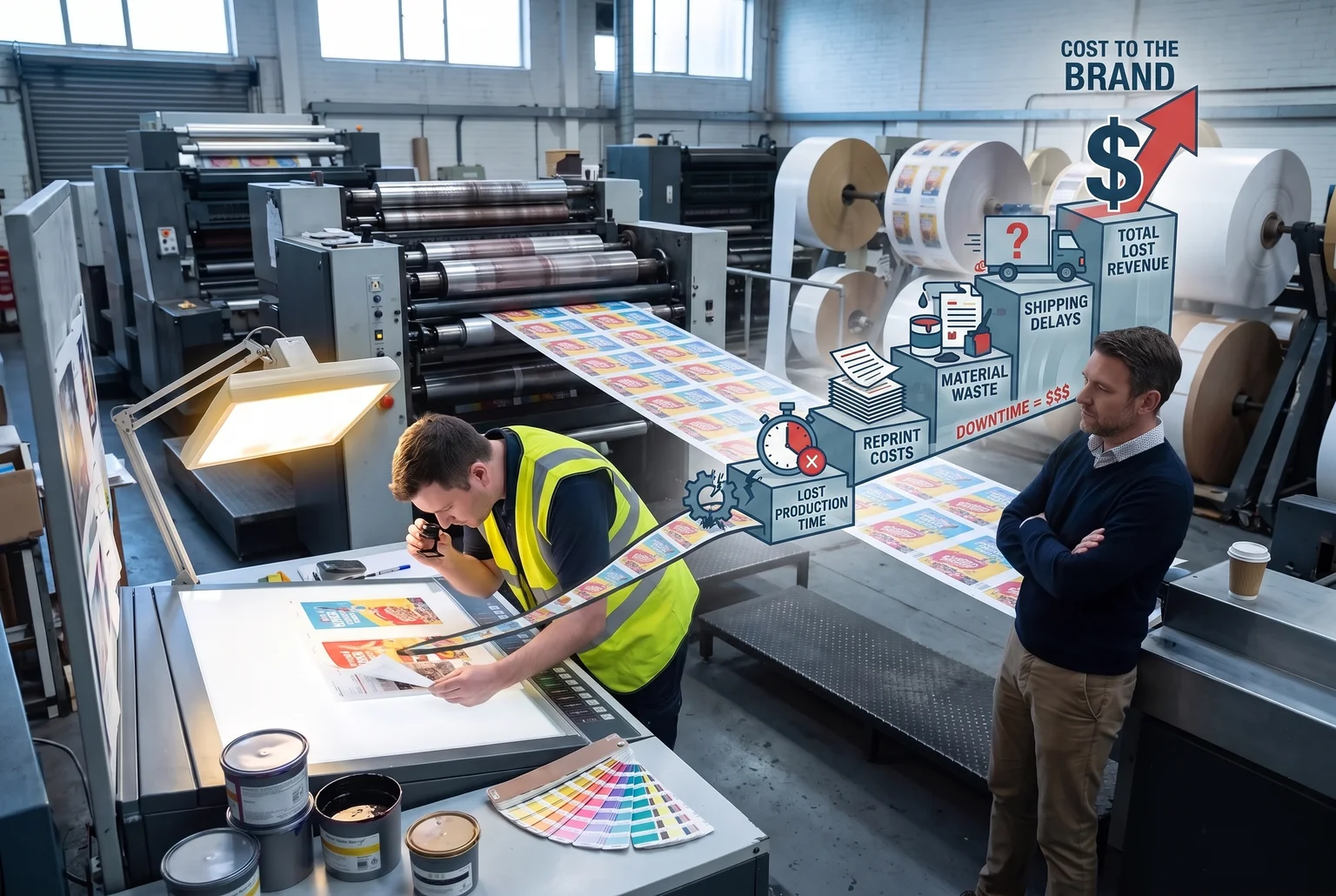
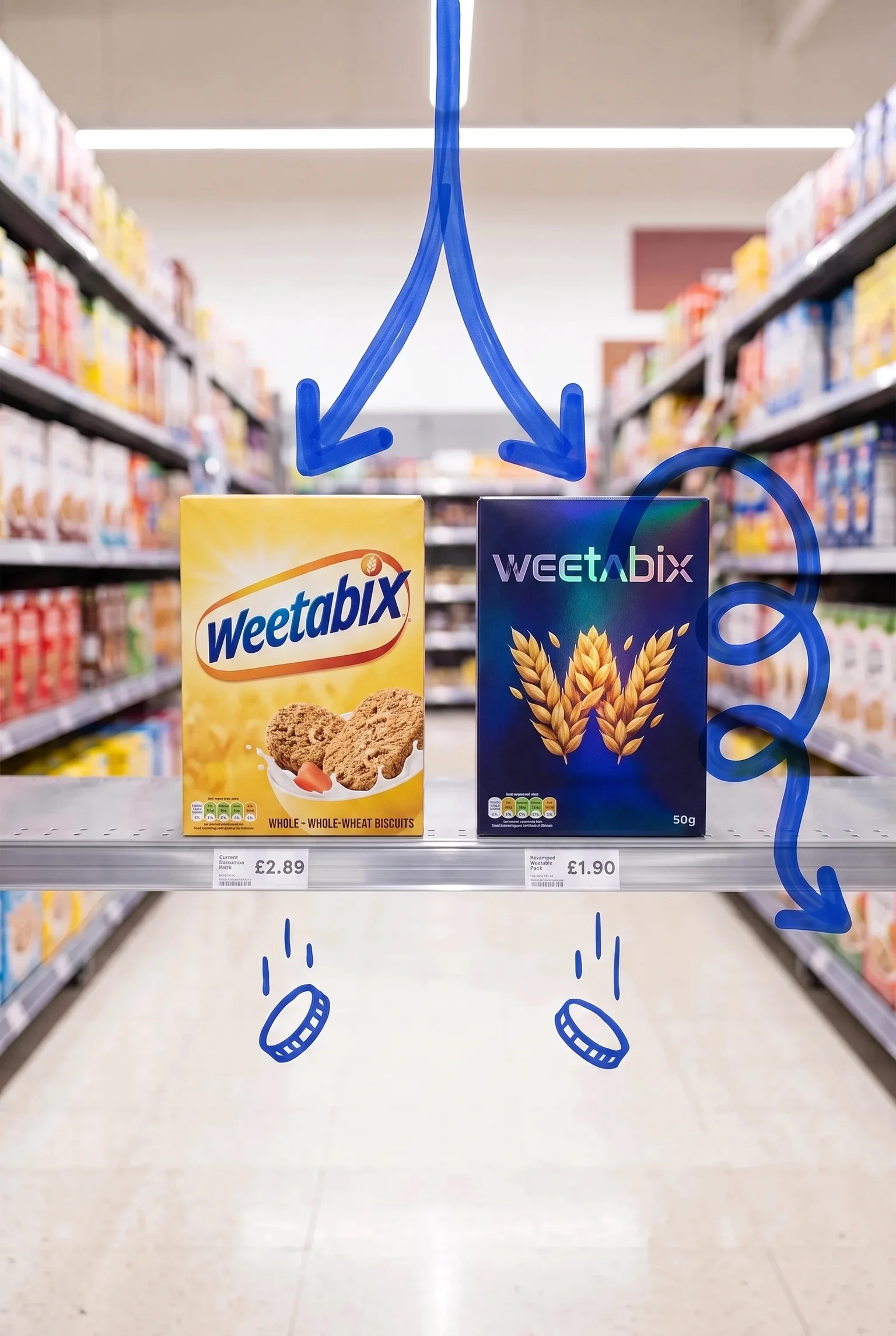
Under-change, and you polish a pack that was never the problem. It stays invisible or unclear on shelf, and rate of sale doesn’t move. Over-change, and you break the recognition you’d already paid years to build, trigger a stock and artwork churn, and hand your buyer a reason to question the listing at the next range review.
Both mistakes cost real money. Nine times out of ten the founders arguing about style haven’t agreed on what’s actually broken, so they’re solving different problems with the same budget.
That diagnosis is what the next section sets out.
The four problems, in shelf terms
There are four things that can be wrong with a pack. Only one of them is a style problem, and it’s the one founders reach for first.
Tired execution. The pack still gets recognised and shoppers still understand it. It just looks dated next to what’s landed around it. Rate of sale is steady but slipping, and the buyer’s started using words like “looking a bit old”. The equity is intact. The finish has aged.
Broken recognition. Shoppers no longer find you quickly. Distinctive assets, your colour block, logo placement, shape, have drifted or been diluted, so the automatic shortcut that gets a hand to your pack in under four seconds isn’t firing. This shows up as flat repeat purchase from people who liked the product. Consistent cues drive faster recognition and repeat buying; when they wobble, habitual buyers hesitate or miss you.
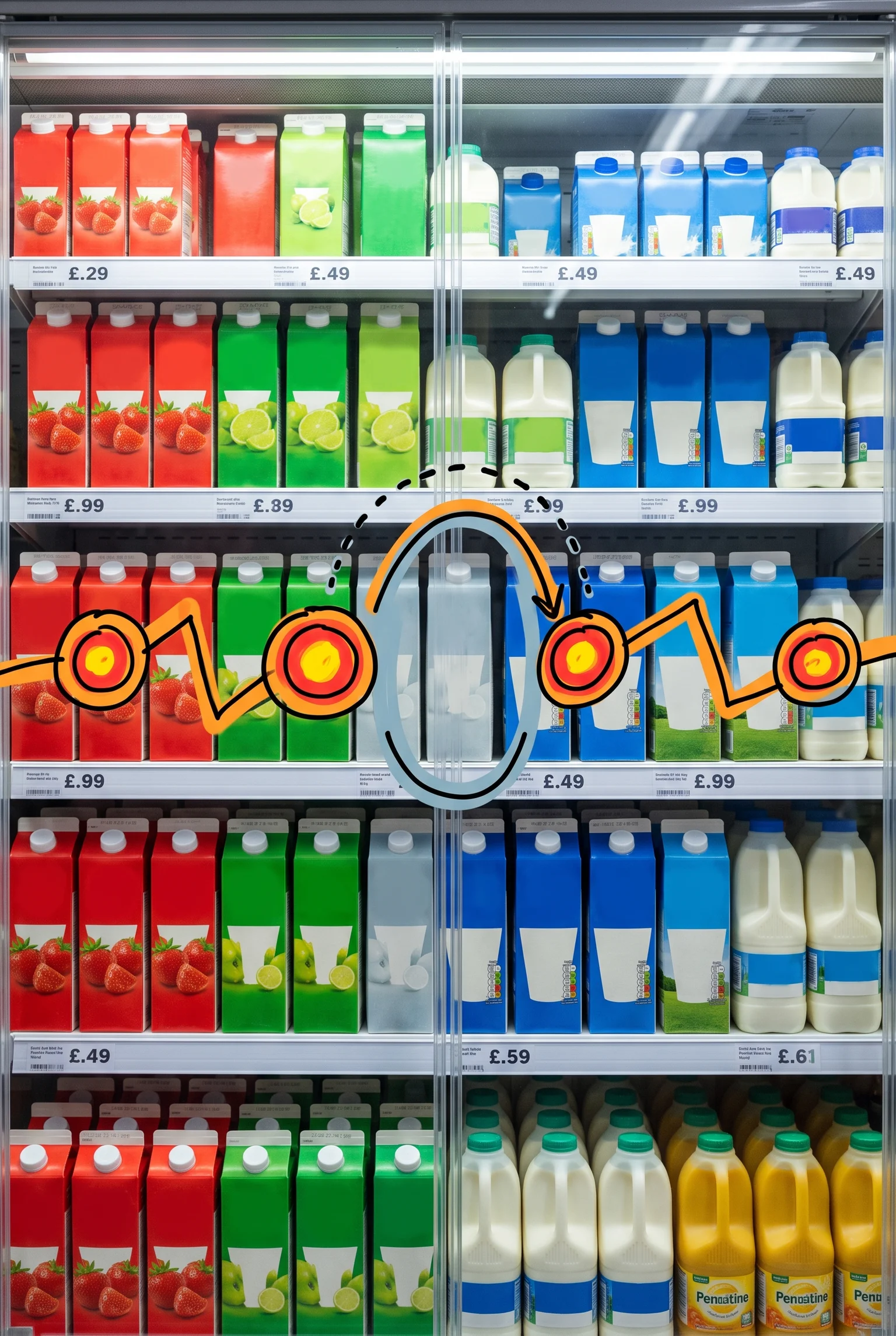
Unclear value communication. Shoppers see you but can’t work out what you are, who you’re for, or why you cost what you cost. The pack fails to justify its price, so it converts poorly and stalls at range review because the buyer can’t defend its space either. Weak information hierarchy makes strong products look less valuable, and clear benefit and quality cues are what let a pack hold a premium.
A proposition problem. The product itself doesn’t have a clear reason to exist on that shelf. It’s me-too, mispriced, or aimed at nobody in particular. No layout fixes this, because the pack is communicating a proposition that isn’t there.
The trap is that all four produce the same symptom, soft rate of sale, and the same instinct, “let’s change the look”. They need different fixes, and three of them aren’t cosmetic.
What a refresh actually fixes, and what it keeps
A refresh is the right answer to exactly two of the four problems: tired execution, and broken recognition where the damage is drift rather than collapse.
That’s it. If your diagnosis is either of those, a refresh does the job, and it does it for a low-to-mid four-figure sum rather than the tens of thousands a full rebrand runs.
The reason to keep it narrow isn’t budget. It’s what a refresh protects.
You’ve spent years teaching shoppers to find your pack in under four seconds. A refresh modernises the finish while keeping the colour block, the logo placement, the shape, the cues that habitual buyers reach for without reading. Update those elements, don’t replace them.
It also protects the listing. A refresh you can time with the buyer, roll out cleanly, and explain in a range review without reopening the question of whether you belong on that shelf at all.
People treat refresh as the timid choice. It isn’t timid. It’s precise, and it’s only correct for a precise diagnosis.
When you actually need a rebrand, and the bill that comes with it
A rebrand is the right answer to one problem: a proposition that no longer holds. It’s occasionally the answer to unclear value communication, but only when the confusion is baked into the name or the core identity, not the layout.
If shoppers understand exactly what you are and simply don’t want it any more, no amount of design fixes that. The pack isn’t the problem. The offer is.
Be clear about the downside. Renaming or heavily reworking an identity commonly brings an immediate 5 to 20% sales dip, and recovery can take years. You’re teaching every habitual buyer to find you again from scratch.
That dip lands at the worst possible moment. UK retailers run range reviews looking for weaker performers, and a soft rate of sale gives a buyer a rational reason to cut you or squeeze your terms.
A rebrand spends your recognition equity on purpose. Only do it when the thing that equity was built on has stopped working.
Under-changing and over-changing both cost real money
Both mistakes come from the same place: choosing the change you’re comfortable with instead of the one the problem needs.
Under-changing is the more common of the two. You polish tired execution when the actual issue is the proposition. The pack looks tidier, rate of sale doesn’t move, so six months later you tweak it again.
That’s how a founder ends up paying for the same job three or four times. Each round carries fresh design fees, new printing plates and setup charges, and stock write-offs on artwork you’ve just made obsolete.
The spend never shows up as one alarming number. It leaks out in small amounts nobody adds together, while the buyer watches a flat line and starts drafting the range review.
Over-changing costs differently. You commission a full rebrand when a refresh would have fixed it, and you pay for scope you didn’t need: new identity, asset replacement across every SKU, rollout and implementation work that dwarfs the design invoice.
Then you carry the recognition risk we covered a moment ago, spent for no commercial reason.
The under-changer bleeds slowly and blames the market. The over-changer writes one large cheque and gambles equity that was working fine.
Neither bill is the design fee. The real cost is the rate of sale you failed to protect, or the recognition you spent by accident.
The “just tidy it up” option pleases the room and fixes nothing
You know the meeting. Half the team wants a full rebrand, half wants to leave it alone, and the position everyone can live with is a light tidy-up. It feels sensible. It is usually the worst option on the table.
The tidy-up wins because it upsets nobody, not because it matches the problem you have. That is the trap. Compromise decisions in organisations often embed a consensus that few people actually believe in, chosen to keep the peace rather than to move rate of sale.
If your real issue is the proposition, a tidy-up leaves it untouched and still bills you for design, plates and new stock. You have spent money and changed nothing the buyer can see at the next review.
So ask the harder question in that room. Not “what can we all agree on,” but “which of the four problems are we actually solving.” The comfortable answer and the correct one are rarely the same pack.
Review regularly and do it properly
Big brands do review on a rhythm. The rule of thumb across industry guidance is small tweaks every 18 to 24 months, a broader review every three to five years, and a larger overhaul around five to six.
The logic is simple. A brand selling well still drifts, so you catch the drift while it is cheap to fix rather than waiting until rate of sale tells you at a range review.
But treat the calendar as a reminder to look, not an instruction to change. There is no verified dataset proving anyone rebrands every five years like clockwork, and the larger redesigns are driven by commercial triggers, not the date. Declining sales, retailer pressure, a proposition that has moved, a category that has crowded around you.
Faster categories move quicker. If you are in something high-growth, a two to three year look is sensible.
So the cadence tells you when to run the diagnosis again. It never tells you which of the four problems you have.
Do the diagnosis before the argument, not after
The framework only works in one order. Name the problem first, then let the answer follow. Do it the other way round and you are not diagnosing, you are justifying a decision someone already made in a meeting.
That is where most of these go wrong. The refresh-or-rebrand argument gets settled by whoever holds rank or feels strongest, and the diagnosis gets quietly reverse-engineered to fit.
So before anyone in the room says the word “refresh” or the word “rebrand”, make them say which of the four problems you actually have. Tired execution, broken recognition, unclear value, or proposition. Get honest agreement on that, and the spend, the risk, and the shelf consequence stop being a matter of opinion.
The decision is only as good as the diagnosis underneath it.
Sources
- Packaging design elements influence purchase intention (peer-reviewed study) — PMC / Peer-reviewed journal
- Packaging Design Mistakes That Make Good Products Look Weaker Than They Are — Fact & Form
- Packaging Information Cues and Willingness to Pay Premium for Private-Label Functional Foods: The Mediating Role of Brand Attachment — Journal of Development and Social Sciences
- How to change a brand’s name successfully — Millward Brown
- New Tesco range review to have huge implications for suppliers — The Grocer
- Cost of Reworking Food Packaging — Toast Food
- The True Cost of Rebranding Most Business Owners Don’t Budget For — Off The Mark IP Solutions
- Hidden risk – Consensus problematized in crisis … – DiVA Portal — DiVA Portal
- Packaging redesign: why most fail and what drives success — Plastics Engineering (industry commentary)