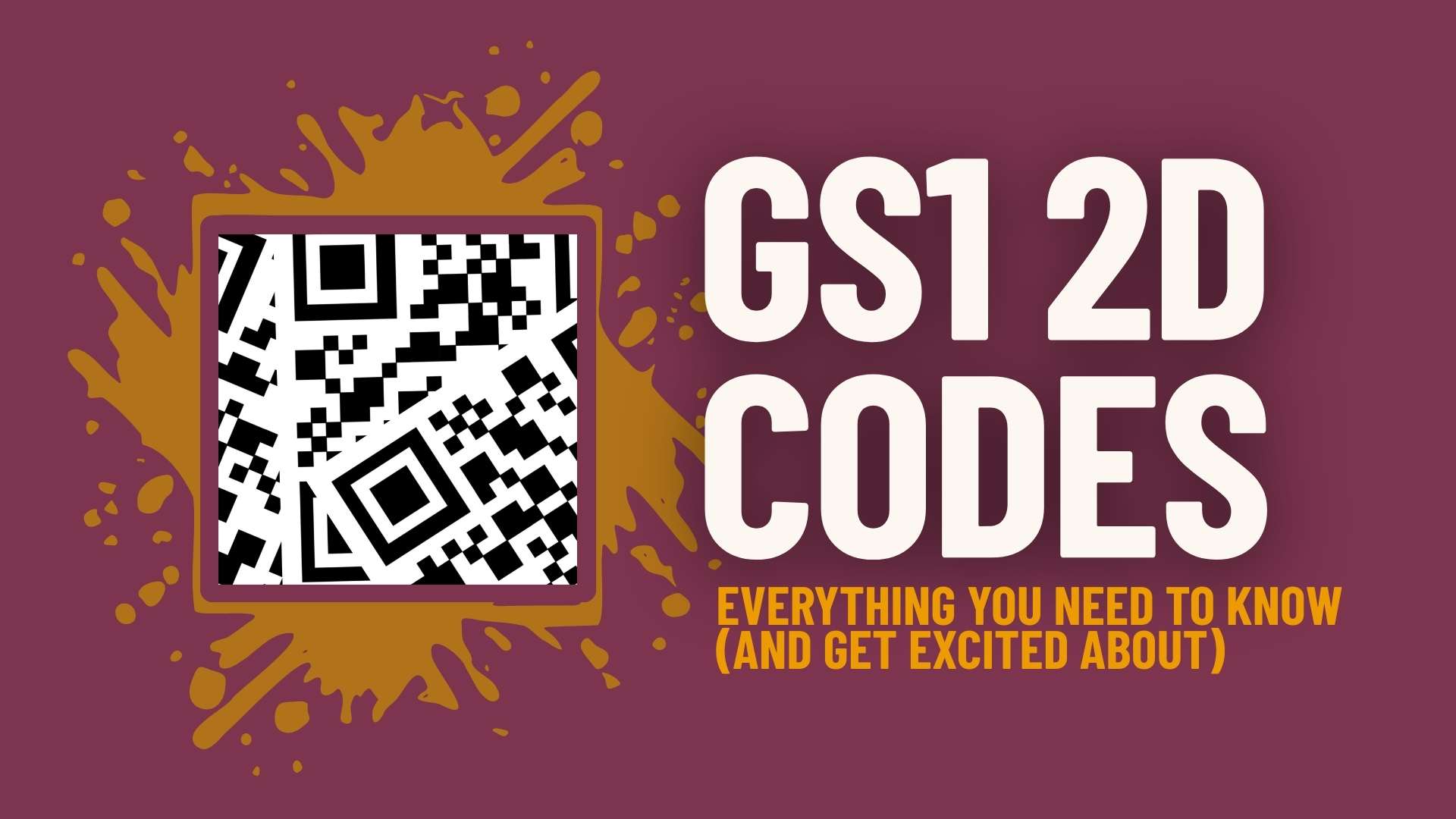
Think of how often customers pick up a product, scan a barcode, and get nothing more useful than registering the product at a self-service checkout. Now imagine if by scanning the barcode it could lead them to your brand story, safety info, recipes, or even a special offer. This is the idea behind GS1 2D codes — a new generation of barcodes that’s transforming packaging into a digital data touchpoint.
By 2027, they’re set to become the global retail standard. For startups, it’s a timely chance to modernise packaging as you begin, boosting customer trust and competing with bigger brands through smarter, more connected experiences.
What is GS1 Digital Link?
GS1 Digital Link is a global standard that turns traditional barcodes into smart, web-connected tools. Instead of just storing a product number for checkout, each barcode provides a shortcut to your own website – rich with product data and anything else you want to display.
When someone scans the GS1 2D code with their phone, they can be taken directly to a webpage with product information, ingredients, allergy details, promotions, or sustainability stories.
The GS1 2D code is the printed barcode on your packaging, while GS1 Digital Link is the system that gives it this interactive power. Together, they make it easy for small businesses to connect physical products to digital experiences — without needing extra space on the packaging or complicated technology.
Why Brands Should Pay Attention: Key Benefits

1. Stronger Consumer Engagement & Brand Connection
GS1 2D codes turn your packaging into a digital experience. A quick phone scan can take customers to your website, a short video, your brand story, or a detailed product page. It’s a chance to make your packaging do the talking — without adding more text or clutter.
You can show where your product was made, who made it, and how it supports your values, such as sustainable packaging or ethical sourcing. You can also display practical details like ingredients, allergens, nutritional facts, expiry dates, or care instructions.
The best part is flexibility — you can update what customers see anytime, even after products are already on shelves. You might add a limited-time promo, a recipe, or a new campaign message without reprinting packaging.
This also opens a path to accessibility. You can create pages that read aloud product details, show larger fonts, or include audio guides to help people who are vision-impaired access your content easily. It’s a simple way to make your brand more inclusive.
2. Better Traceability, Safety & Recall Management
Each 2D code can be unique to a batch or even a single item. That means you can track every step, from production to warehouse to store shelf. If there’s ever a recall, you don’t need to pull everything, just the affected items.
This saves time, money, and reduces waste. It also builds consumer confidence by proving your brand can trace and verify every product’s journey.
3. Operational Efficiency & Cost Savings
Using GS1 Digital Link means you can replace several barcodes and data labels with one. Less clutter means cleaner packaging, fewer label versions, and reduced printing costs.
Suppliers are already preparing to integrate these 2D codes into their packaging lines. For startups, this might involve small adjustments to your label layout or printing equipment, but it can simplify future production runs and make your processes more efficient in the long term.
It also helps reduce manual errors and improve inventory tracking — giving you a clearer view of stock levels and batch data in real time.
4. Future-Proof Your Brand
Retailers around the world are preparing to fully support 2D barcodes by 2027. Getting started now means your business won’t be caught off guard later. You’ll already have the right systems, packaging setup, and data structure in place when the shift happens.
This early adoption can also position your startup as forward-thinking and ready for the next phase of digital retail, where smart packaging, traceability, and sustainability reporting will become standard.
5. Gain a Competitive & Marketing Edge
For small brands, GS1 Digital Link levels the playing field. You can offer the same interactive packaging experience that large companies provide, even on a modest budget.
Every scan gives you valuable insight into how customers interact with your products. You can learn when, where, and how often people scan your items, and use that data (in a privacy-safe way) to understand your audience better.
And because you control the link, every scan leads customers directly to your own website or campaign page, not a third-party page. This gives you complete ownership of your brand experience, creating a direct connection between you and your customer.
Use Ideas / “What You Could Do”

GS1 2D codes open up countless creative ways to connect with your customers — beyond the checkout counter. For small businesses and startups, it’s a chance to make packaging interactive, helpful, and even fun. Here are some simple and practical ways to use GS1 Digital Link codes:
- Product landing pages: Each scan leads to a branded page with photos, videos, your story, and usage tips.
- Allergy or safety info: Quick answers like “Does this contain nuts or gluten?” are shown instantly when scanned.
- Recall alerts: If a batch has an issue, scanning the code can show a recall notice and safety instructions — no reprinting needed.
- Recipes and upsells: For example, scanning pasta sauce could show recipe ideas and suggest other products like garlic bread or wine.
- Loyalty, coupons, and contests: Reward customers with discounts, loyalty points, or giveaway entries when they scan.
- Refill, reuse, or recycling info: Teach customers how to recycle, refill, or return your packaging.
- Accessibility options: Link to pages with large text, audio versions, or plain-language content for better accessibility.
- Language switching: Automatically show information in the local language depending on where the scan happens.
- Inventory or stock checks (for B2B): Retailers or partners can scan to see stock levels or batch details.
- Product authentication: Let customers confirm your product is genuine — ideal for premium or high-risk items.
- Augmented reality experiences: Scans can unlock videos, animations, or behind-the-scenes content.
- Smart sustainability tracking: Show where your materials come from or a product’s carbon footprint.
- Personalised messages: Tailor the scan experience based on customer location or purchase history.
Strategy for a Small Brand / Startup in Using GS1

1. Understand Your Product and Use Cases
Start by identifying which of your products would benefit most.
- Focus on perishables, regulated goods, premium or high-value products — anything where traceability, freshness, or consumer engagement matters.
- Think about what your customers would find useful when scanning: recipes, origin stories, care instructions, or promotions.
2. Get GS1 Identifiers (if you don’t already have them)
Every product needs a GTIN (Global Trade Item Number), and your business may also need identifiers like a GLN (Global Location Number).
- You can get these directly from your local GS1 member organisation.
- These codes are the foundation for linking your products to digital content.
3. Choose a Resolver Solution
The resolver is the “brain” behind the scan — it directs the user to the right online content.
- You can use a GS1-approved service or a self-hosted platform.
- For startups, it’s best to begin with a simple, low-cost platform like GS1 that lets you edit links and track basic scan data.
4. Design Your Digital Content Strategy
Plan what customers will see when they scan your product.
- Decide what information to include — such as product details, ingredients, videos, promotions, or sustainability stories.
- Keep it simple and visually consistent with your brand.
- Content is created and hosted in the same way as a standard website.
5. Pilot and Test
Before going all-in, run a small test.
- Pick one product line to start with.
- Test how the barcode works at checkout (POS) and on consumer phones.
- Ask a few customers for feedback on what they see after scanning.
6. Integrate Your Systems
Over time, connect your barcode data to your business systems.
- Link your ERP, inventory, or content management systems so product data updates automatically.
- This helps keep everything accurate and consistent.
7. Update Packaging and Printing
Make sure your packaging can fit and properly display the new 2D code.
- Follow GS1’s guidelines for barcode size, placement, and clear space (quiet zones).
- You may need to adjust your label layout or printing equipment.
8. Roll Out and Monitor
Launch your first GS1 Digital Link product to market.
- Track how often customers scan, what devices they use, and whether pages load correctly.
- Get feedback from retailers and consumers to improve your setup.
9. Iterate and Expand
Once the pilot works smoothly, roll out to more products.
- Add more content types, like promotions, personalisation, or loyalty rewards.
- Use the insights you gather from scans to improve future campaigns.
10. Plan for Full Adoption (Sunrise 2027)
The global retail industry aims to fully accept 2D barcodes by 2027.
- Keep following GS1 updates so you can stay aligned with new standards and timelines.
- Gradually phase out 1D barcodes as your partners and systems are ready.
At Goulding Media, we help businesses of all sizes across the UK create packaging that’s ready for the future. Our team can design, adapt, and print packaging layouts that meet GS1 standards — without losing your brand’s visual appeal.
Whether you’re preparing for your first pilot run or planning a full rollout, we’ll make sure your packaging is compliant, functional, and beautifully designed. Get in touch with us to start your GS1-ready packaging project today.
Examples & Case Studies From Around the World
Woolworths (Australia)
Woolworths has been one of the early adopters of GS1 2D barcodes, using them to improve efficiency and reduce waste in their fresh food departments. By encoding extra information such as batch numbers and use-by dates,
Woolworths was able to cut food waste by around 40% and improve productivity by about 21%. The new barcodes also helped automate expiry checks and speed up recall processes, creating both environmental and operational benefits.
Parla Deli (Brazil)
Parla Deli, a small gourmet shop in Brazil, became one of the first retailers to fully adopt GS1 Digital Link. By replacing traditional barcodes with 2D QR codes that carry GS1 identifiers, they improved inventory tracking, managed expiry dates more efficiently, and connected customers directly to digital product information. This case shows how even small businesses can benefit from the same smart barcode technology used by global brands.
Future Trends & What’s Coming
The “Sunrise 2027” Transition:
GS1 has set a global goal for all retail point-of-sale (POS) systems to accept 2D barcodes, including GS1 Digital Link, by the end of 2027. This shift will make smarter, information-rich QR codes the new retail standard worldwide.
Regulatory and Marketplace Pressures:
Governments and major retailers are moving toward more transparency and sustainability requirements, such as the Digital Product Passport (DPP) in Europe. GS1 Digital Link helps meet these demands by connecting products to verified digital information about sourcing, ingredients, and recyclability.
Connected Products and Smart Technology:
With the rise of the Internet of Things (IoT), everyday items like smart fridges, shelf sensors, and automated restocking systems will read 2D barcodes. GS1 Digital Link gives every product a unique web address so machines and apps can exchange real-time information.
Simplified Packaging – “One Code to Rule Them All”:
The future will bring consolidation — one single, multipurpose barcode that handles everything from checkout to traceability, marketing, and compliance. This will reduce clutter on packaging and simplify production.
Summary & Take-Away Advice
GS1 2D codes mark a major step toward smarter, more connected packaging. For startups, they represent a chance to stay ahead of retail trends and show customers that your brand values transparency and innovation.
Adopting this system early helps you future-proof your operations and align with global standards taking effect by 2027. The shift to 2D barcodes isn’t just about technology—it’s about building trust, improving communication, and creating packaging that works harder for your business.