The introduction of the UK’s HFSS (High Fat, Sugar, Salt) regulations is reshaping how food and drink brands approach growth, product strategy, and packaging within the wider context of UK food regulations and public health initiatives.
Designed to reduce children’s exposure to foods high in salt, sugar, and fat as part of the childhood obesity strategy in the UK, HFSS does not limit which products can be sold or eliminate indulgent categories tied to junk food marketing.
Instead, it restricts where certain products can be promoted, particularly in high-visibility spaces such as front of store, checkouts, secondary displays, and select advertising slots under HFSS advertising restrictions and fast food advertising laws in the UK.
For mid-size brands, these restrictions create a unique growth opportunity over bigger brands that cannot easily reformulate some product lines under the HFSS policy in the UK. To see how this opportunity plays out in practice, it’s important to first understand what HFSS actually restricts and how these limitations create space for mid-size brands to act strategically.
What HFSS Actually Restricts
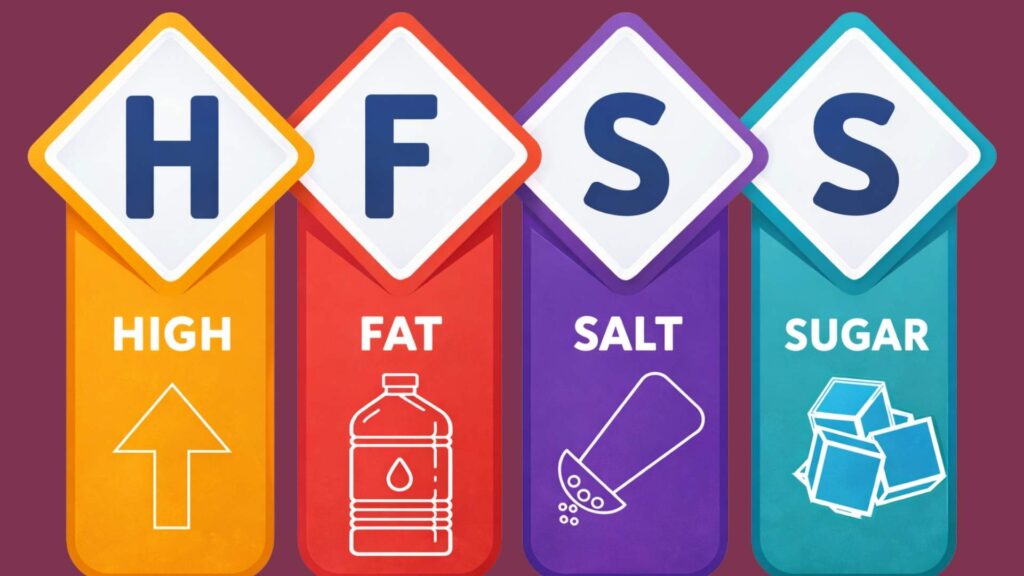
HFSS regulations restrict where and how products are promoted, not whether they can be sold, reinforcing HFSS compliance in the UK rather than banning categories outright.
Core supermarket aisles remain unaffected, with full range, pricing, and availability unchanged.
Restrictions are concentrated in high-impact spaces:
- Front of store
- Checkouts
- Secondary displays
- Certain TV and online advertising slots
These zones disproportionately drive impulse purchase, trial, and brand salience. HFSS reshapes visibility mechanics, not shopper demand.
Why HFSS Creates Opportunity Instead of Risk
HFSS does not remove products or reduce demand. It restricts access to high-visibility locations as part of UK food regulations and the wider sugar tax UK and health policy landscape.
Most brands do nothing. They keep existing recipes and accept standard aisle placement. Sales usually stay stable.
Large brands move quickly to protect hero products and reduce risk across multiple lines, but some products don’t favour change. This leaves an opportunity in restricted spaces.
HFSS-compliant products face less competition in front of stores, checkouts, and secondary displays than in core aisles. New players will emerge in these spaces.
Those locations drive impulse and trial. Shoppers are more open to trying new products when they appear in everyday, justified contexts.
HFSS rewards brands that act quickly and design products to qualify. For mid-size brands, this creates a clear route to increased visibility, trial, and incremental growth without fighting established players head-on.
Why Mid-Size Brands Are Best Positioned
Mid-size brands can move faster than large competitors. Decisions on product packaging design, reformulation, and packaging are made quickly.
They rely less on legacy hero products, so they can experiment without risking core revenue.
They have greater flexibility across product development and range design, allowing them to create HFSS-compliant products that feel intentional rather than compromised.
They can act freely without protecting national-scale SKUs, taking advantage of restricted retail spaces and media placements that bigger brands leave unused.
The Three Strategic Paths Under HFSS
HFSS forces brands to make an explicit strategic choice. Each path comes with different risk, speed, and upside profiles.
1. Do Nothing
This is the default option for many brands.
Products remain unchanged and continue to trade through standard core aisles, where HFSS has no impact.
The short-term downside is limited because distribution, shopper behaviour, and price mechanics stay broadly the same.
However, brands following this path forfeit access to high-impulse locations, gradually losing visibility and trial over time as compliant competitors occupy those spaces.
Best suited to: large, established brands with strong baseline demand and high household penetration.
2. Reformulate Existing Products
This approach aims to unlock restricted space by adjusting existing recipes to meet HFSS thresholds.
Success delivers immediate access to front-of-store, checkout, and promotional visibility.
The risk is significant:
- Even small taste changes can trigger consumer backlash
- Reformulation failures are highly visible and hard to reverse
- Mid-size brands lack the equity buffer to absorb negative perception
For many brands, the commercial upside is outweighed by the brand and loyalty risk.
Best suited to: brands with deep R&D capability, strong sensory testing, and tolerance for short-term disruption.
3. Launch HFSS-Compliant Products
This path treats HFSS as a design constraint from day one.
Products are built to qualify at launch, avoiding compromise on existing favourites.
Crucially, these launches are incremental, not replacements:
- They expand the portfolio
- Capture new occasions and impulse moments
- Protect core SKUs from reformulation risk
This route delivers access to restricted spaces while keeping brand trust intact.
Best suited to: brands seeking growth with lowest reputational, sensory, and commercial risk.
Why New HFSS Products Drive Growth
New HFSS-compliant products succeed because they enter the market on their own terms.
They avoid direct comparison with original recipes, removing the most common trigger for disappointment or backlash.
Consumer expectations are set correctly at first trial — shoppers judge the product for what it is, not what it used to be.
Because the product is designed to qualify from day one, it feels intentional and deliberate, not like a compromised version of a favourite.
This intentionality makes the product easier to justify in impulse and family decision moments, where reassurance and perceived balance matter more than indulgence alone.
Where Growth Actually Comes From
Growth under HFSS is primarily a visibility and trial story, not a demand story.
Front-of-store and checkout exposure dramatically increase mental availability at the moment of purchase.
Impulse purchases rise as shoppers encounter compliant products in high-traffic, low-friction locations.
New SKUs attract shoppers outside the core customer base — including families, light buyers, and health-adjacent consumers who would otherwise bypass the category.
Finally, HFSS-compliant products unlock retail and media placements that competitors simply cannot access, creating a disproportionate share of attention relative to spend.
Packaging as the Growth Lever
Under HFSS, packaging becomes the primary growth engine, not a supporting asset.
As access to traditional advertising and high-impact promotions narrows, the pack itself takes on the job advertising once did: stopping shoppers, explaining the product, and justifying the purchase, all in seconds.
Example: Food Connections Better for You range
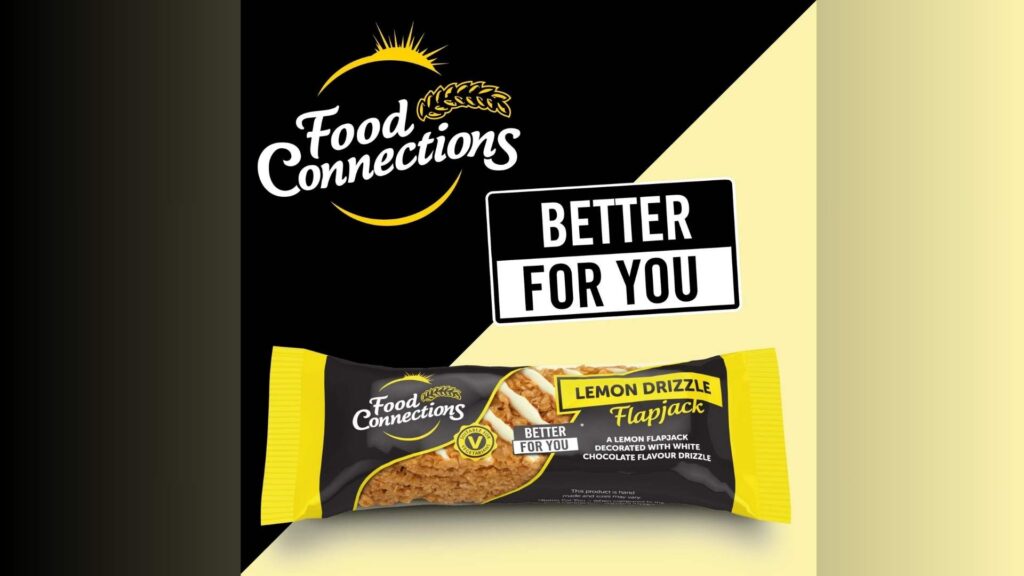
We at Goulding Media supported Food Connections with the packaging development for the launch of their new HFSS-compliant Better for You range. Rather than reinventing the brand, the design deliberately builds on the existing pack style, using a clear Better for You flash to signpost the healthier credentials.
Why this approach worked:
• The products remain the same, much-loved snacks
• Flavour and enjoyment are unchanged
• Recipes were reformulated to reduce saturated fat, deliver slower energy release, and meet vegan requirements
• A full redesign risked confusing shoppers and disrupting sales
This lighter-touch evolution allows consumers to confidently choose familiar favourites, with an immediate visual cue that signals a better choice.
Because many HFSS-compliant products live in impulse-led environments (front of store, checkouts, secondary displays), packs must communicate value instantly. Shoppers don’t browse; they decide.
Strong brand recognition reduces trial friction. Familiar colours, assets, and cues reassure shoppers that the product will deliver, even if it’s new to them.
When packaging is confusing, over-engineered, or visually disconnected from the parent brand, momentum collapses. Shoppers hesitate, trial drops, and the advantage of restricted-space access is lost.
In short: under HFSS, packaging doesn’t just house the product — it does the selling.
If you want to make the most of HFSS opportunities, working with an experienced packaging designer in the UK can help. At Goulding Media, we create packs that capture attention, communicate value instantly, and turn visibility into sales.
How Shoppers Choose HFSS Compliant Products
Shoppers don’t adopt HFSS-compliant products as permanent substitutes. They choose them selectively, in specific moments.
These products are picked when the context makes them feel like the right option, not because shoppers have fundamentally changed their preferences.
Common moments include:
- Treats that feel easier to justify, especially midweek or alongside routine shops
- Family occasions, where reassurance, balance, or shared acceptability matters
- Impulse purchases, when the decision is fast and emotional rather than planned
Crucially, the choice is contextual, not moral. Shoppers are not “being good” or “being healthy” — they are simply responding to the situation they’re in.
HFSS-compliant products win by fitting the moment, not by trying to replace indulgence altogether.
Risks Mid-Size Brands Need to Manage
HFSS creates opportunity, but mid-size brands face asymmetric risk compared to market leaders and start-ups operating under UK food regulations.
1. Brand Dilution
Reformulation or poorly differentiated HFSS launches can blur what the brand stands for. Mid-size brands lack the excess equity to absorb confusion without long-term damage.
2. Taste Credibility Risk
Taste is often the primary reason shoppers choose mid-size brands. Any perception of compromise can trigger rapid switching, and recovery is slow.
3. Portfolio Cannibalisation
HFSS-compliant products must be genuinely incremental. If they replace core SKUs rather than add occasions, total brand sales stall.
4. Packaging Misfires
Under HFSS, the pack does the selling. If design fails to communicate brand, benefit, and reassurance instantly, trial collapses.
5. Execution Speed vs Scale
Large brands can afford to be slow and correct mistakes. Mid-size brands must get the first execution right — relaunches are expensive and visible.
6. Retail Expectation Mismatch
Retailers expect HFSS products to earn restricted space quickly. Underperformance risks delisting, not patience.
The Bottom Line
HFSS has not reduced demand for indulgent products despite ongoing sugar tax UK measures and UK public health initiatives. Shoppers continue to buy chocolate, crisps, and snacks as usual.
What has changed is how visibility is earned. Access to the front of the store, checkout, secondary displays, and certain media is now determined by HFSS compliance.
Mid-size brands that move quickly can capture these high-impact spaces before larger competitors respond, gaining a disproportionate advantage.
Success under HFSS comes to brands that combine speed, clear product strategy, and intentional packaging design. Those who treat compliance as an opportunity, not a burden, can grow visibility, trial, and incremental sales without risking their core range.